
Thyroid Nutritionist
Nutrition Support for Better Thyroid Health
Get in Touch With Us!
We aim to get back to you in 24 hours.
Understanding what to eat when you have a thyroid condition can be difficult. Online advice often recommends restrictive diets, specific supplements and long lists of foods to avoid, making nutrition feel far more complicated than it needs to be.
At Thyroid Nutritionist, we provide personalised nutrition support based around your current diet, lifestyle and individual goals.
Rather than prescribing one universal “thyroid diet”, we help you develop a balanced, practical and sustainable approach to nutrition that works in everyday life.
Speak to a Thyroid Nutritionist Today
Personalised Nutrition for Thyroid Health
There is no single diet that everybody with a thyroid condition needs to follow. The British Thyroid Foundation states that there are no specific foods or dietary supplements that can be used to treat a thyroid disorder and recommends eating a balanced variety of foods in appropriate proportions.
That makes your individual diet an important starting point.
Our nutritional support can include:
- Reviewing your current diet
- Improving meal balance
- Increasing dietary variety
- Protein and fibre intake
- Meal and snack planning
- Weight-management nutrition
- Understanding thyroid-related nutrients
- Reviewing supplements
- Identifying unnecessary food restrictions
- Vegetarian and vegan nutrition
- Nutrition alongside thyroid medication
- Developing sustainable eating habits
The objective isn't to make your diet more restrictive. It's to identify worthwhile changes that fit your circumstances.
What Does a Thyroid Nutritionist Do?
A thyroid nutritionist focuses on the nutritional side of living with a thyroid condition.
We can look at what you currently eat, how your meals are structured, the supplements you use and any dietary restrictions you already follow.
From there, nutritional recommendations can be tailored around your priorities.
For one person, this could mean improving protein and fibre intake. For another, it might involve reviewing a highly restrictive diet or making meal preparation easier.
Someone else may simply want to understand the enormous amount of conflicting thyroid nutrition information they have encountered online.
Nutrition for an Underactive Thyroid
An underactive thyroid, or hypothyroidism, occurs when the thyroid gland doesn't produce enough thyroid hormones.
Nutrition isn't a substitute for medical treatment, but maintaining a healthy, balanced diet remains an important part of looking after your general health when living with a thyroid condition.
Our approach can help you develop an eating pattern that works alongside the treatment prescribed by your healthcare professional.
Hashimoto’s Nutrition
Hashimoto’s thyroiditis is an autoimmune thyroid condition and can result in hypothyroidism.
Nutrition advice surrounding Hashimoto’s can be particularly confusing.
You may encounter recommendations to eliminate gluten, dairy, grains, soya or numerous other foods.
Rather than assuming that everyone with Hashimoto’s requires the same restrictions, we take an individual approach.
If you have already eliminated foods from your diet, we can also consider whether those restrictions are making it harder to achieve a varied and balanced nutritional intake.
Is There a Specific Thyroid Diet?
There isn't one universal thyroid diet.
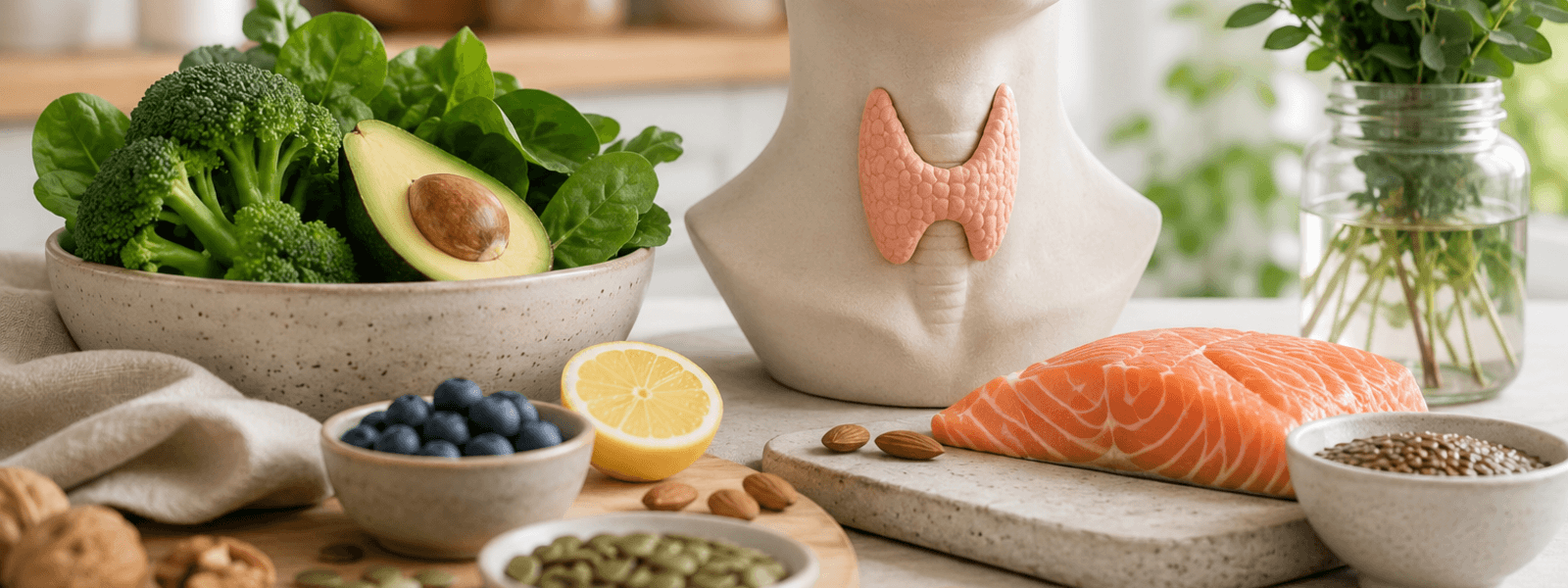
Instead, a balanced eating pattern can incorporate a variety of:
Vegetables and fruit
Helping provide fibre alongside vitamins, minerals and other nutrients.
Protein sources
Including fish, eggs, meat, beans, lentils and pulses.
Higher-fibre carbohydrates
Such as potatoes, oats, rice, bread, pasta and wholegrains.
Healthy fats
Including nuts, seeds, olive oil and oily fish.
Dairy or appropriate alternatives
Depending on your dietary requirements and preferences.
The British Thyroid Foundation similarly recommends a balanced diet containing appropriate proportions of vegetables and fruit, higher-fibre starchy foods, protein sources, dairy or alternatives and unsaturated fats.
Thyroid Nutrition Without Unnecessary Restrictions
One of our main aims is to make thyroid nutrition simpler.
It can be tempting to make several changes immediately after being diagnosed with a thyroid condition.
But removing gluten, dairy, carbohydrates and other foods simultaneously can leave you with an extremely limited diet without necessarily addressing your individual nutritional needs.
Instead, we can work through your diet logically:
Current diet → nutritional assessment → priorities → practical changes
This allows changes to have a clear purpose.
Iodine and Thyroid Health
Iodine plays an important role in producing thyroid hormones, but this doesn't mean somebody with a thyroid condition should automatically take additional iodine.
The British Thyroid Foundation advises that people taking levothyroxine for hypothyroidism do not need iodine supplements. It also cautions against products such as kelp and sea moss because their iodine content can interfere with thyroid function.
This is a good example of why supplements shouldn't automatically be added simply because a nutrient is associated with the thyroid.
Selenium and Thyroid Nutrition
Selenium is involved in thyroid hormone metabolism and is naturally found in foods including eggs, fish, legumes and Brazil nuts.
However, more isn't necessarily better.
Evidence around selenium supplementation depends on the thyroid condition and circumstances, and excessive supplementation can be harmful.
Your existing diet should therefore be considered before deciding whether additional supplementation is appropriate.
Thyroid Supplements
The thyroid supplement market includes everything from individual vitamins and minerals to products advertised specifically as “thyroid support”.
Supplements should have a clear purpose.
Our approach is:
Review your diet → identify potential requirements → consider food sources → supplement appropriately where required
If you already take several supplements, we can look at them alongside your overall nutritional intake.
Medical questions about whether a particular supplement is appropriate alongside your medication should be discussed with your doctor or pharmacist.
Levothyroxine and Nutrition
If you take levothyroxine, the way you take your medication can affect absorption.
Certain foods and supplements can interact with levothyroxine. For example, the British Thyroid Foundation advises that calcium, iron and soya can interfere with absorption and may need to be separated from levothyroxine.
Nutrition support can help you understand how your normal eating and supplement routine fits around this guidance.
We don't change prescribed medication or thyroid dosages. These decisions remain with the healthcare professional responsible for your treatment.
Thyroid Nutrition and Weight Management
Weight management is one of the most common reasons people with an underactive thyroid become interested in nutrition.
Rather than introducing an extreme diet, we can look at the factors that influence your overall food intake.
These can include:
- Portion sizes
- Meal structure
- Protein intake
- Fibre intake
- Snacks
- Drinks
- Eating patterns
- Overall energy intake
Meal planning can also make it easier to maintain a consistent eating pattern throughout the week.
Practical Thyroid Meal Planning
Good nutrition needs to work outside of a consultation.
That's why we place a strong emphasis on practicality.
If you're busy in the morning, we can consider breakfasts that don't require extensive preparation.
If you take lunch to work, we can look at meals that can be prepared in advance.
If you're cooking for a family, we can focus on balanced meals everyone can eat rather than expecting you to prepare a separate “thyroid-friendly” dinner every evening.
Your nutritional plan should fit around your life rather than your entire life revolving around your diet.
Get Personalised Thyroid Nutrition Support
Vegetarian and Vegan Thyroid Nutrition
Vegetarian and vegan diets can provide a varied nutritional intake, but removing animal-derived foods changes where certain nutrients come from.
Depending on your existing diet, we may consider your intake of:
- Protein
- Iron
- Vitamin B12
- Calcium
- Vitamin D
- Iodine
- Selenium
- Zinc
Rather than making assumptions based on the label “vegetarian” or “vegan”, we look at the foods you actually eat.
Why Choose Thyroid Nutritionist?
Personalised Guidance
Your recommendations are based around your current diet, circumstances and objectives.
Practical Nutrition
Changes are designed to work in normal everyday life.
Balanced Approach
We don't automatically remove foods simply because they appear on a generic thyroid diet list.
Sustainable Changes
The emphasis is on developing habits you can realistically continue.
Clearer Information
We help you make sense of conflicting nutrition information and focus on the areas that are relevant to you.
Online Thyroid Nutrition Consultations
Our online consultations provide convenient access to personalised thyroid nutrition support from home.
Your initial consultation can explore your current diet, routine, food preferences, supplements and nutritional goals.
We can then identify the areas worth prioritising and develop practical recommendations.
Follow-up support can be used to review your progress, address difficulties and adapt your nutritional approach where appropriate.
Frequently Asked Questions
What is the best diet for thyroid health?
There isn't one specific thyroid diet recommended for everyone with a thyroid condition. A balanced and varied diet is generally recommended instead.
Can nutrition cure hypothyroidism?
No. Nutrition shouldn't be presented as a cure for hypothyroidism or as an alternative to prescribed treatment.
Can a thyroid nutritionist help with Hashimoto’s?
Yes, nutritional support can help someone with Hashimoto’s review their diet, eating habits and nutritional intake. It complements rather than replaces appropriate medical care.
Do I need to avoid gluten?
Not simply because you have a thyroid condition. If you have diagnosed coeliac disease, a strict gluten-free diet is required, but thyroid disease itself doesn't automatically establish a need to eliminate gluten.
Should I take iodine?
Don't automatically start iodine supplements because you have a thyroid condition. In particular, the British Thyroid Foundation states that people taking levothyroxine for hypothyroidism do not need iodine supplements.
Can you help with weight management?
Yes. Where this is one of your objectives, we can review your meal structure, food choices, portions and overall eating habits.
Do you provide meal-planning advice?
Yes. Practical meal planning can form part of your nutritional support and can be adapted around your routine and food preferences.
Speak to a Thyroid Nutritionist
If you are tired of conflicting advice about thyroid diets, supplements and foods to avoid, personalised nutrition support can provide a clearer way forward.
We'll help you understand your current diet, identify worthwhile improvements and develop an approach that is balanced, practical and sustainable.
Get in touch today to arrange your initial thyroid nutrition consultation.
What People are Saying About Us
★★★★★
“I was overwhelmed by all the different advice about thyroid nutrition. Everything was explained clearly and I came away with a much more practical approach to my diet.”
Jessica Morgan
North West
★★★★★
“The recommendations fitted around my normal routine rather than expecting me to completely change how I eat. I feel much more confident about my food choices now.”
Claire Thompson
North West
★★★★★
“I wanted help understanding my diet alongside my thyroid condition and supplements. The whole process was straightforward, personalised and incredibly useful.”
Natalie Foster
North West
★★★★★
“What I liked most was how realistic the advice was. There were no extreme restrictions, just sensible changes that I could actually maintain.”
Amy Richardson
North West
Take the Next Step With Your Thyroid Nutrition